

In practice, this involves identifying which elements can be prepared or fabricated away from site and which must be completed on location. Accommodation units, offices, clinics, utilities, and supporting systems may be partially or fully fabricated off-site, while site teams focus on access, foundations, services, and enabling works as conditions allow.
The exact balance between off-site and on-site work depends on the project, influenced by ground conditions, logistics, access windows, and client requirements. What matters is that fabrication and site preparation are not treated as sequential phases.
By allowing these workstreams to progress concurrently, overall deployment timelines compress. When components arrive on site, effort shifts toward assembly, integration, and commissioning rather than starting construction from raw materials. The result is reduced exposure to material delays, weather interruptions, and supply-chain constraints that typically extend timelines for fully site-built facilities.
What Rapid Demobilization Requires
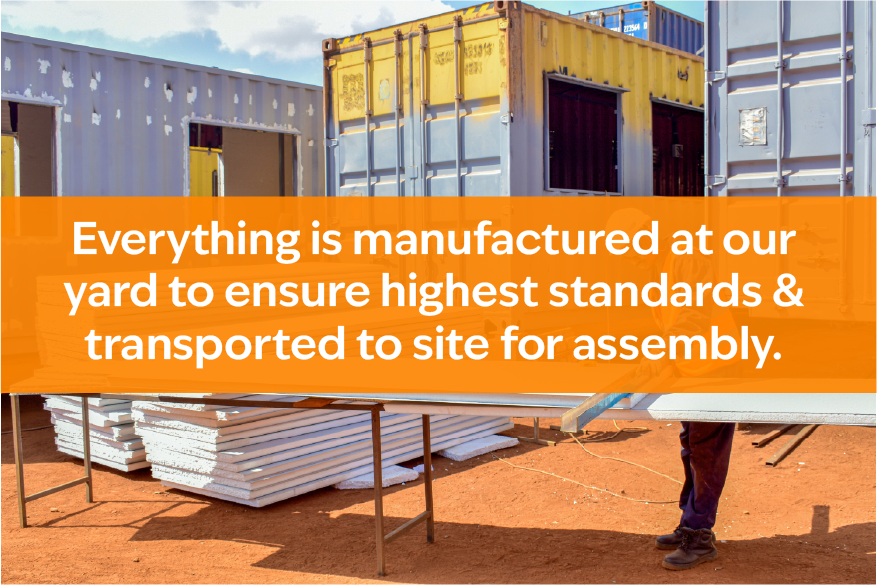
In remote projects, demobilization is the process of removing, relocating, or repurposing facilities when a project phase ends. It determines whether infrastructure becomes stranded capital or remains a productive asset.
Facilities engineered for disassembly can be removed using standard equipment. Structures are then relocated to subsequent project phases or stored for future use. This approach:
- Eliminates permanent site footprints
- Recovers capital for subsequent phases or projects
- Reduces decommissioning costs
- Maintains flexibility as project requirements evolve
For operations with phased development or pipeline projects moving through sections, relocatable infrastructure prevents repeated capital expenditure on workforce facilities.
Why Regional Manufacturing Changes Timelines
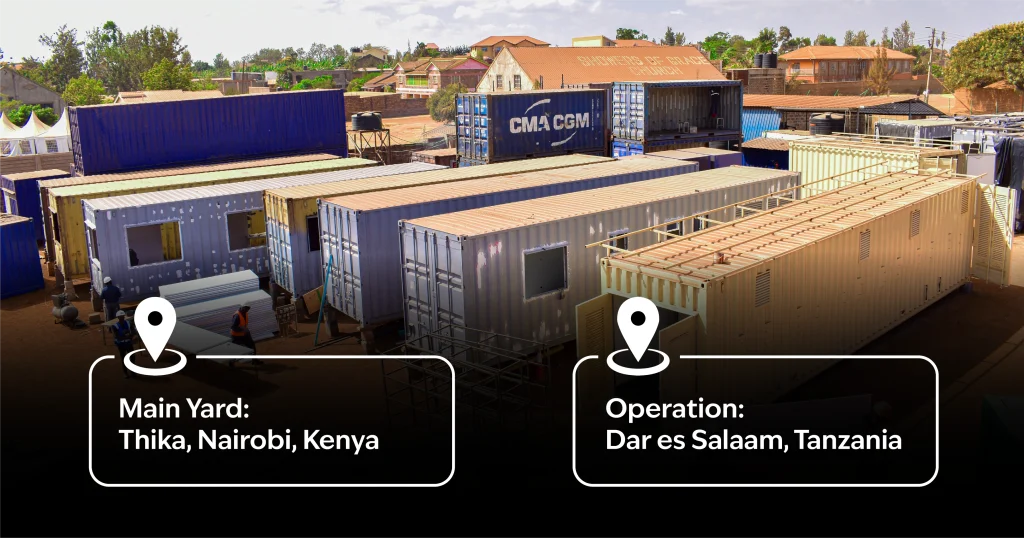
Overseas modular suppliers can add several months to deployment timelines due to shipping, customs clearance, and international freight coordination.
Timeline impact includes:
- Shorter delivery windows measured in weeks rather than months
- No multi-country customs processes
- More predictable transport costs
- Modifications or additions during project execution handled in days rather than through overseas coordination
In addition, systems are designed for African operating conditions — including power fluctuations, water scarcity, and extreme temperatures — rather than adapted from other specifications. Solar integration, water treatment, and core utilities are incorporated during manufacturing, allowing facilities to be commissioned immediately on site.
Deployment in Practice
Remote Mining Camp – Zambia
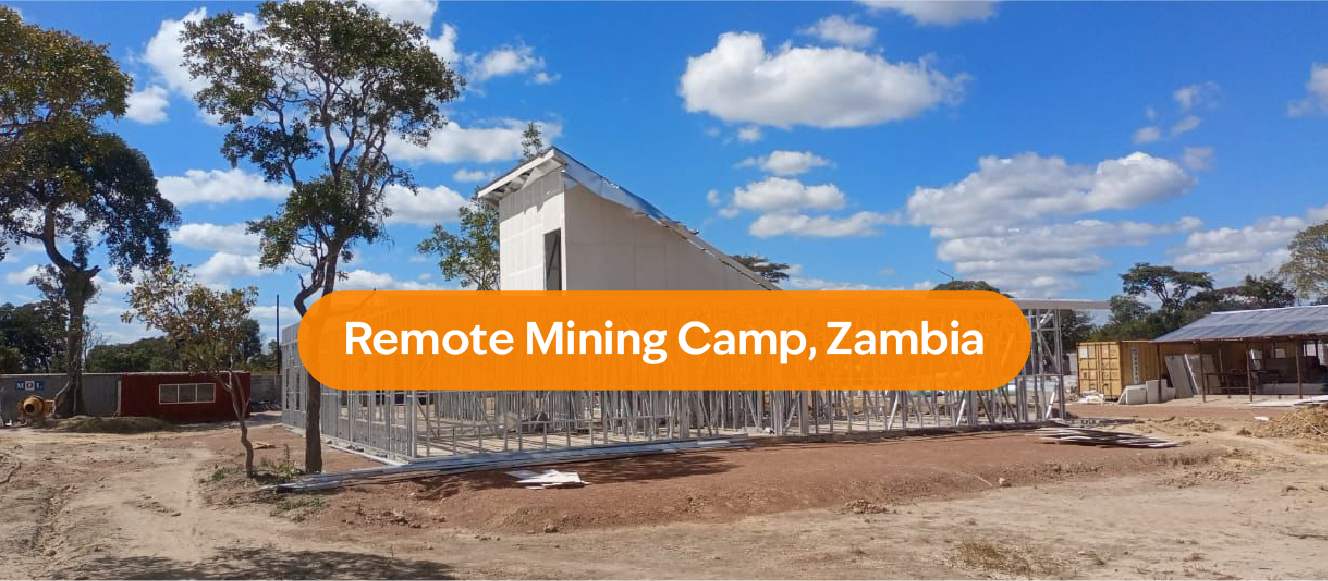
Following LC Africa’s expansion into Zambia, a remote mining camp was delivered to support active mining operations in a location with limited access and constrained supply chains. The project required rapid deployment while maintaining durability and safety in a demanding operating environment.
LC Africa deployed modular Tetris Technology units for workforce accommodation and support facilities. Key structural components, including light gauge steel systems manufactured in Kenya, were transported cross-border to site, allowing quality control while enabling efficient on-site assembly. The camp was designed to support current operations with flexibility for future expansion or reconfiguration.
Uganda Pipeline Support Camp (EACOP)
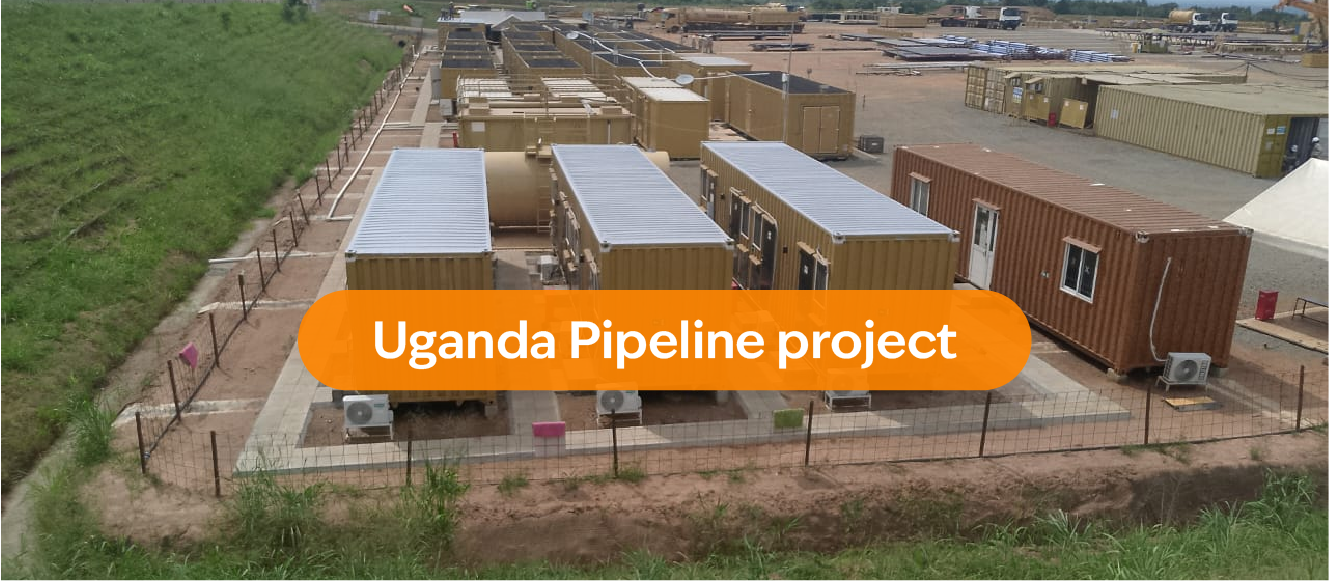
As part of the East African Crude Oil Pipeline (EACOP) project, LC Africa delivered a remote workers’ camp in an isolated location with strict environmental and access constraints.
Fifteen modified 40-foot container units were fabricated at LC Africa’s Nairobi facility and delivered to site within a 21-day turnaround. The units provided accommodation, kitchen, and dining facilities and were rapidly integrated on site. The modular design allowed the camp infrastructure to be adapted or relocated as pipeline construction progressed.
Base Titanium Camp – Kwale County, Kenya
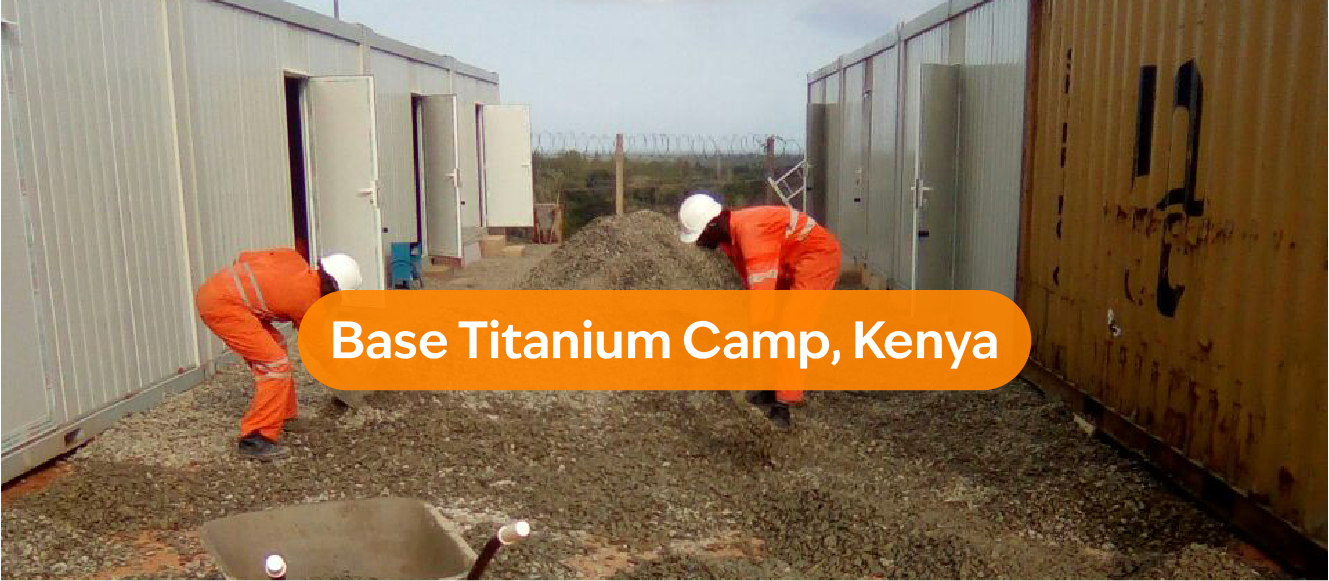
At the Base Titanium mining site in Kwale County, LC Africa delivered a functional workers’ camp to support construction and mining operations undertaken by Stefanutti in a non-urban setting.
Using prefabricated flat-pack container systems, LC Africa implemented essential camp structures that enabled efficient logistics, rapid assembly, and compliance with construction and safety standards. The camp was configured to support ongoing operations while allowing adjustment as site requirements evolved.
Need a Remote Camp Infrastructure for Your Next Project?
LC Africa manufactures modular camp systems across Africa for mining, energy, and infrastructure projects requiring rapid deployment and relocation capability.
If you’re planning a remote project or reassessing your camp deployment approach, an early discussion around site conditions and timelines can help clarify options. +254 797 968 817 or info@lc-africa.com